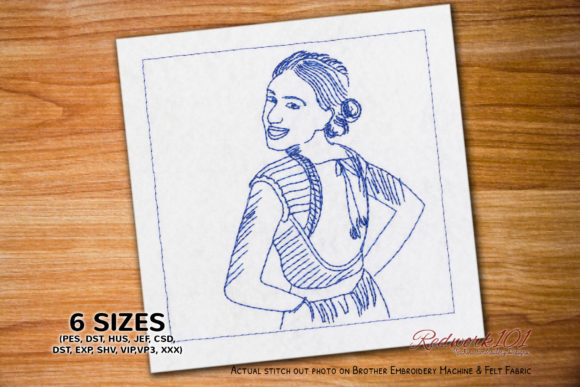
Reviewing Girl with Backless Dress Redwork for Craft Fairs
As an embroidery designer who has spent countless weekends behind a booth table, I know that the difference between a browsing customer and a buying customer often comes down to visual impact. When I first pulled up the Girl with Backless Dress Redwork file on my digitizing screen, my immediate thought was about versatility. This is not just another generic motif; it is a piece of art that bridges the gap between vintage charm and modern minimalism. For those of us running small shop products or managing an Etsy seller account, finding designs that translate well from digital embroidery file to finished product is crucial.
First Impressions: Minimalist Charm with Vintage Roots
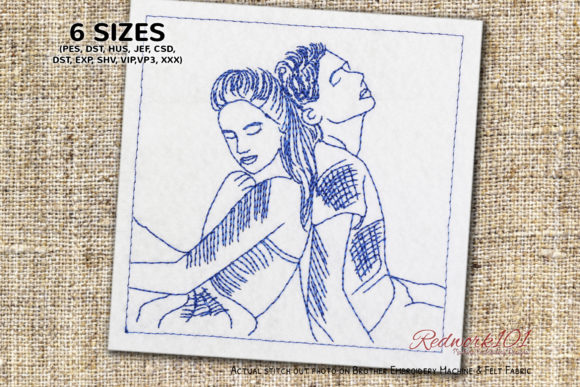
The aesthetic of this design leans heavily into the redwork tradition, which is inherently nostalgic and warm. However, the subject matter—a girl in a backless dress—adds a touch of whimsy and elegance that prevents it from feeling dated. It feels soft, decorative, and undeniably cute without being overly childish. In a crowded craft fair environment, where buyers are bombarded with loud colors and complex patterns, the simplicity of this design allows it to breathe. It stands out because it is understated. It invites the viewer to look closer, appreciating the clean lines and the negative space that defines the form.
For handmade product creators, this mood is invaluable. It fits seamlessly into farmhouse, rustic, and even modern boutique aesthetics. Whether you are targeting customers who love heirloom quality or those seeking a unique gift, the emotional resonance of this image is strong. It evokes memories of summer days and simple pleasures, which is a powerful driver for impulse buys at markets.
Product Applications: Where This Design Shines
The true test of any machine embroidery design is its adaptability across different substrates. I evaluated how Girl with Backless Dress Redwork performs on various items typically found in a crafter’s inventory.
- Tote Bag Design: This is perhaps the strongest application. A natural canvas tote with this design centered or placed off-center looks premium. The redwork style contrasts beautifully against beige or white cotton, making it a staple craft fair product.
- Apron Embroidery: Placing this on a bib apron creates a cohesive, charming look. It works particularly well on linen or heavy cotton aprons, appealing to home cooks and bakers who value aesthetics in their kitchen wear.
- Tea Towel Embroidery: Kitchen textiles are high-volume sellers. The design’s simplicity ensures it survives frequent washing without losing its character. It adds a touch of personality to plain flour sack towels.
- Embroidered Patch: If you offer patches, this design scales down well. It becomes a collectible item for jacket customization or bag accessories, appealing to a younger demographic.
- Pillow Covers and Market Bags: As a focal point on a throw pillow, it adds a narrative element to home decor. On market bags, it reinforces the eco-friendly, handmade vibe.
When considering Clothing and Embroidery combinations, think beyond just adult apparel. This design could be stunning on a child’s denim jacket or a simple white t-shirt, provided the hoop size accommodates the placement comfortably.
Production Practicality and Selling Points
From a business perspective, efficiency is key. One of the major advantages of redwork-style designs is the typically lower stitch density compared to full-coverage satin or fill stitches. This means faster run times on your machine, allowing for higher batch production. For a weekend craft fair, being able to produce twenty units in the time it takes to do five complex designs is a significant competitive edge.
The design is also easy to understand at a glance. Customers do not need to decipher abstract shapes; they see a recognizable, pleasing figure immediately. This clarity translates well to online listings too. When creating a printable mockup for your Etsy shop, the clean lines of Girl with Backless Dress Redwork photograph exceptionally well. There is no risk of the details getting lost in poor lighting, which is a common issue with dense, multi-colored designs.
Furthermore, the optional Box Stitch mentioned in the description offers flexibility. If you want a framed, more formal look, include it. If you prefer a floating, organic feel, skip it. This adaptability allows you to create varied product lines from a single digital embroidery file, maximizing your return on investment for design assets.
Careful-Use Notes and Technical Considerations
While this design is robust, there are technical nuances to consider before launching your commercial embroidery campaign. Always check the specific details of the file you purchase, as stitch count and exact hoop size requirements can vary between digitizers.
- Fabric Texture: Redwork relies on clear outlines. Avoid highly textured fabrics like thick terry cloth or loose-weave linens unless you use a strong cut-away stabilizer. The stitches need a smooth surface to maintain definition.
- Thread Contrast: Since this is likely a single-color or two-color design, thread choice is critical. Ensure high contrast between the thread and the fabric. A dark red on navy blue will vanish, while a bright red on cream pops.
- Curved Surfaces: If applying this to caps, be mindful of the curvature. The design should be positioned carefully to avoid distortion. A smaller version may work better on structured caps than a large one.
- Small Details: If scaling down for patches or small pouches, verify that the lines do not become too thin to stitch cleanly. Test on scrap fabric first to ensure the needle does not perforate the material excessively in tight areas.
- Stabilizer Selection: Use a stabilizer appropriate for your fabric weight. For lightweight tea towels, a tear-away might suffice, but for stretchy tote materials, a cut-away is safer to prevent puckering.
Enhancing Brand Consistency and Buyer Engagement
Incorporating Girl with Backless Dress Redwork into your lineup can strengthen your brand identity if you specialize in vintage-inspired or minimalist handmade goods. It signals attention to detail and a curated taste. When customers see consistent quality and aesthetic across your tote bags, aprons, and pillows, they are more likely to trust your brand.
To maximize buyer engagement, display these items together in your booth. Create a vignette with a tote bag, a matching tea towel, and a patch. This cross-merchandising technique encourages multiple purchases. Additionally, use the design in your marketing materials. A well-lit photo of the embroidery on a natural fabric background can serve as a powerful visual hook on social media, driving traffic to your small shop product listings.
Before finalizing your inventory, confirm commercial licensing terms with the provider of the digital embroidery file. Ensuring you have the right to sell finished products protects your business and allows you to scale with confidence. With proper testing and strategic placement, this design is poised to be a standout performer in your next craft fair season.